How Fixing Technical SEO Helped an Ecommerce Store Grow Organic Traffic by 210%

Technical SEO is often treated as the less exciting part of search engine optimization. Most businesses would rather talk about keywords, content, backlinks, and rankings than canonical tags, duplicate URLs, or internal linking. But for ecommerce websites, technical problems can quietly limit organic growth even when the products and content are good.
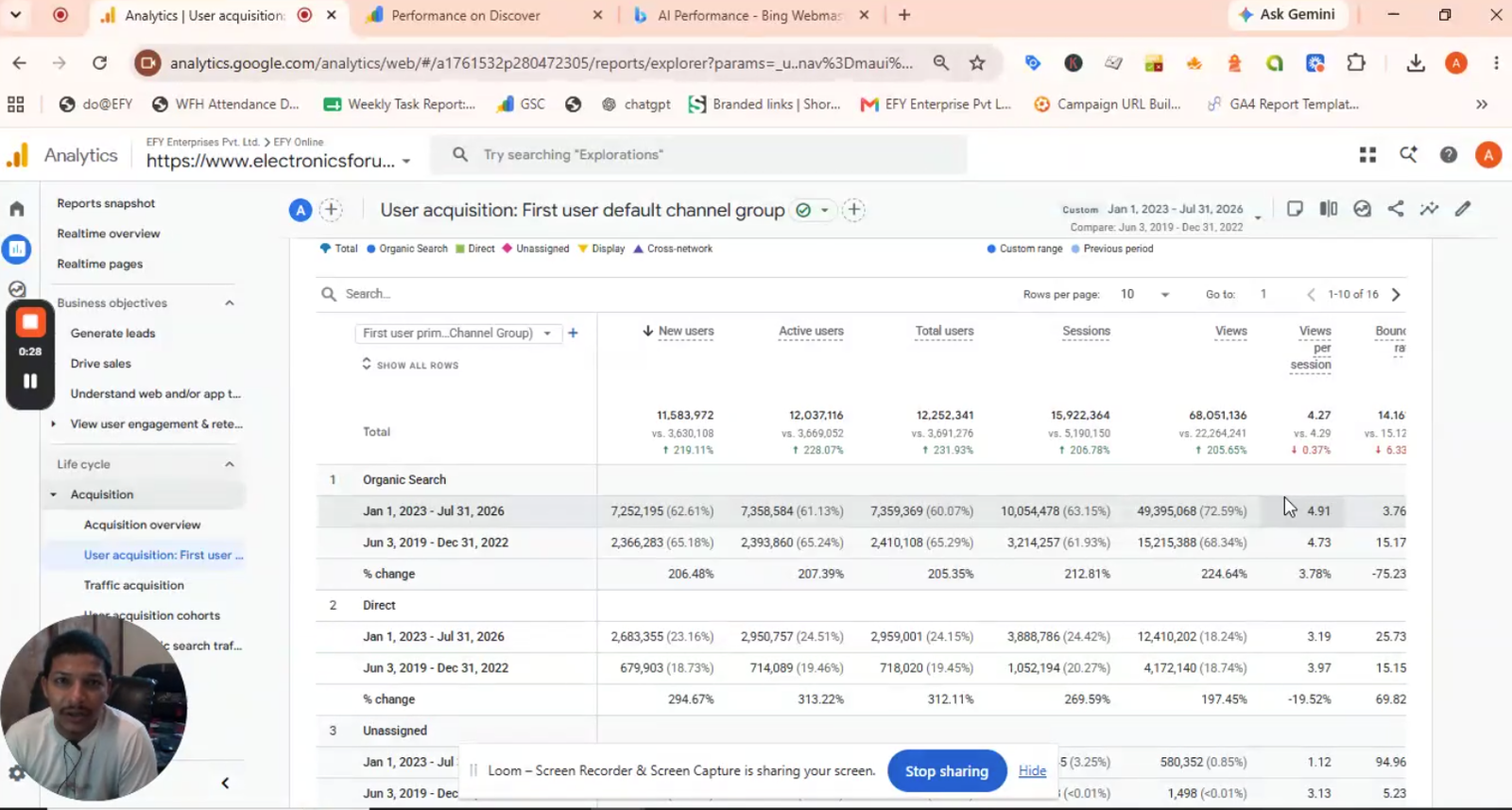
A case study from Raleigh Digital involving The Eastwood Project shows what can happen when an ecommerce website addresses these problems systematically. According to the agency’s published case study, the website increased organic traffic by 210% over 12 months, grew its ranking keywords from 480 to 1,460, and increased organic revenue by 137% year over year. The company also reported achieving this growth without additional advertising spend. These figures are agency-reported results rather than independently audited data, so they should be viewed in that context.
What makes this case study particularly interesting is that the result did not come from one technical fix. Technical SEO was an important part of the strategy, but the work also included improving collection pages, optimizing product pages, implementing structured data, and strengthening internal linking. The bigger lesson is how these different parts of ecommerce SEO can work together.
The problem was not a lack of products
The Eastwood Project already had an ecommerce website and products that could potentially attract organic searches. However, its organic performance had remained relatively flat for around a year. The site was ranking for about 480 keywords, but much of its existing visibility was associated with branded searches.
This is a common situation with ecommerce websites. A business may have hundreds or thousands of products, but having more URLs does not automatically create more search visibility. Google still needs to discover those pages, understand their purpose, determine which pages are important, and match them with relevant searches.
If a website creates large numbers of duplicate or low-value URLs, has weak category pages, or fails to connect important pages through internal links, adding more products can make the website more complicated without necessarily making it more visible in search.
The SEO work therefore started with the existing website rather than simply adding more content.
Duplicate URLs were creating unnecessary complexity
One of the technical issues identified in the case study involved tag pages generating thousands of URLs with very similar content. Ecommerce websites can easily create this type of problem because products can often be accessed through categories, tags, filters, variants and other URL parameters.
For example, a product could potentially be available through a normal product URL as well as URLs generated by a category, tag, colour filter, or product variant. When these URLs contain substantially similar information, search engines have to determine which version should be treated as the main page.
Also check: how to handle Faceted Navigation URLs for E-commerce SEO.
This is where canonicalization becomes important. A canonical URL can help Google understand which version of a page should be considered the preferred version when duplicate or very similar URLs exist. Google recommends using canonicalization to consolidate duplicate URLs and signals around a preferred URL.
However, canonical tags should not be treated as a magic SEO fix. They are one part of a larger URL and crawling strategy. The goal is to make the website structure easier for search engines to understand rather than simply adding canonical tags everywhere.
Cleaning up technical SEO is only part of the job
This is an important point when looking at the reported 210% traffic increase. It would be misleading to say that fixing duplicate URLs alone generated 210% more traffic.
The case study describes a broader SEO campaign. Technical improvements created a better foundation, but the team also worked on the pages that were supposed to attract and convert organic visitors.
This included collection pages, product pages, structured data, and internal linking. That combination is probably the most useful part of the case study because ecommerce SEO rarely succeeds through one isolated tactic.
A technically clean website with poor content can still struggle to rank. A website with excellent product descriptions but a confusing URL structure can also struggle. The strongest results often come from improving both sides.
Collection pages were given more value
One of the problems with many ecommerce websites is that category or collection pages contain little more than a heading, a short description, and a product grid.
From a shopping perspective, that might be perfectly acceptable. From an organic search perspective, however, the page may not provide enough information to establish its relevance for broader searches.
The strategy for The Eastwood Project involved improving collection pages and adding content designed around the searches potential customers were making. Instead of treating a collection page as simply a place where products were displayed, the page could also act as a useful search landing page.
This is an important distinction.
Suppose an ecommerce website sells several types of outdoor footwear. A collection page for “waterproof trail shoes” should do more than display products. It can explain what waterproof trail shoes are, who they are suitable for, what features shoppers should consider, and how the products in the collection differ.
That content gives search engines more context while also helping customers make a decision.
The objective isn’t to fill category pages with keywords. It is to make the page genuinely useful for the search intent behind the query.
Product pages were optimized for search intent
Product pages were another important part of the strategy. The case study reports that the existing product descriptions were primarily written for visitors who were already on the website rather than being optimized around the searches that could bring new users to those pages.
This is a common ecommerce SEO problem.
A company may describe a product using its official product name and technical specifications, while customers may search using completely different language. A product page therefore needs to explain what the product is, what problem it solves, who it is for, and which characteristics make it relevant.
This doesn’t mean inserting every possible keyword into the product description. It means understanding the language customers use throughout the buying journey and making sure the page naturally addresses that intent.
For example, a customer might search for “lightweight waterproof hiking shoes” rather than the exact product name used by the manufacturer. If a product genuinely fits that description, the page should make those characteristics clear.
That helps the page become relevant for a wider range of meaningful searches without turning the content into keyword stuffing.
Structured data helped search engines understand the products
The SEO campaign also included product structured data.
Structured data provides search engines with machine-readable information about a page. For ecommerce websites, this can include information such as product names, prices, availability, reviews, and other product attributes.
Google says that correctly implemented product structured data can make ecommerce pages eligible for richer search appearances and help Google understand product information. It does not guarantee higher rankings, and structured data is not a requirement for appearing in Google Search.
This distinction is important because structured data is often marketed as a ranking trick. It isn’t.
Its real value is in providing additional context about the content already present on the page.
For a large ecommerce website, making that information clear and consistent can become particularly useful because search engines have to process large amounts of product information.
Internal linking connected the website
Another important part of the strategy was internal linking.
Internal links are often overlooked because they are much less exciting than link building. But on ecommerce websites, they help establish relationships between categories, products, and informational content.
Google recommends making important ecommerce pages reachable through internal links and maintaining a logical structure connecting category pages to product pages.
A simple ecommerce structure might look like this:
Homepage → Category → Subcategory → Product
But internal linking can go beyond the basic navigation. A useful buying guide can link to a relevant collection, and that collection can link to the products that satisfy the search intent discussed in the guide.
For example, an article about choosing waterproof trail shoes could link to a waterproof trail shoe collection, which then links to individual products.
This creates a clearer relationship between informational and commercial pages. It also gives search engines additional ways to discover important URLs.
The results were significant
After approximately 12 months of SEO work, Raleigh Digital reported that organic traffic increased by 210%. The number of ranking keywords increased from 480 to 1,460, while organic revenue increased by 137% year over year.
The increase in ranking keywords is particularly interesting. Moving from 480 to 1,460 means the website was appearing for almost three times as many tracked search terms.
However, more rankings do not automatically mean an equal increase in revenue. Search queries have different levels of commercial intent.
Some of the newly acquired searches were informational or research-oriented. These searches can generate significant traffic but may not convert at the same rate as searches made by someone who is already looking for a specific product.
That helps explain why a 210% increase in traffic and a 137% increase in organic revenue can exist at the same time.
It is also a good reminder that SEO reporting should not stop at traffic. A website can gain thousands of visitors and still fail to generate meaningful business results if those visitors have little commercial value.
The real lesson is bigger than the 210% figure
The headline number is impressive, but the most useful part of this case study is the strategy behind it.
The website did not simply publish hundreds of blog posts and wait for Google to respond. The work focused on making the existing website easier to crawl and understand while improving the quality and relevance of important commercial pages.
Technical SEO addressed problems with URLs and page relationships. Collection-page optimization created stronger landing pages for broader searches. Product optimization helped individual products match search intent. Structured data added information that search engines could interpret more easily, and internal linking connected the different parts of the website.
None of these activities should be considered independently.
A technically perfect website with weak product pages will still struggle. Great product content cannot compensate for a website filled with duplicate URLs and poor architecture. And thousands of pages won’t necessarily create meaningful organic growth if search engines cannot understand how those pages relate to one another.
The combination is what makes the strategy interesting.
Should you copy this strategy?
Not exactly.
Every ecommerce website has a different technical setup, product catalog, search demand, and competitive environment. What worked for The Eastwood Project does not mean another Shopify store will automatically see a 210% increase after implementing the same checklist.
The better approach is to use the case study as a diagnostic framework.
Start by looking at the URLs Google is actually discovering. Check whether filters, tags, and variants are creating unnecessary pages. Review canonical tags and indexation signals. Look at important collection pages and ask whether they provide enough useful information to satisfy the searches they are targeting.
Then examine product pages. Are they written around real customer questions and search intent, or are they simply copied from manufacturer descriptions? Check structured data and make sure the information being marked up actually matches what users can see on the page.
Finally, look at internal linking. Can Google easily reach your most important products? Are your informational pages supporting commercial pages? Do your category and product pages form a logical structure?
These checks can reveal opportunities before you spend more time creating new content.
The biggest takeaway
The Eastwood Project case study is a useful example of why technical SEO should not be separated from the rest of an ecommerce SEO strategy. The reported 210% increase in organic traffic did not come from one canonical tag, one technical fix, or one clever SEO trick. It came from addressing technical problems while simultaneously improving collection pages, product pages, structured data, and internal linking.
The most important lesson is therefore not “technical SEO can increase traffic by 210%.” That would oversimplify the evidence.
The better lesson is that an ecommerce website can have plenty of products and still leave significant organic search opportunities unused. Before publishing more pages, it is worth checking whether the existing pages are technically accessible, properly connected, useful for searchers, and aligned with the way potential customers actually search.
In this case, improving those foundations was followed by a substantial increase in organic visibility and revenue. That is what makes the case study worth studying.