
AI Mode and AI Overviews: What’s the Difference?

- AI Overviews give users an AI-generated answer directly on the Google Search results page.
- AI Mode is a conversational search experience where users can ask follow-up questions without starting a new search.
- AI Overviews are becoming a standard part of Google Search, while AI Mode is Google’s attempt to compete with ChatGPT and Perplexity.
- If you want your content to win in both, stop writing just for rankings. Start writing to become the best answer.
- The future of SEO isn’t about getting clicks from Google. It’s about becoming the source AI trusts.
AI Overviews and AI Mode: They’re Not the Same Thing
A lot of people are using these two terms as if they mean the same thing.
They don’t.
And if you’re serious about SEO, understanding the difference could change how you create content over the next few years.
I’ve seen many SEO discussions where someone says, “My article appeared in AI Mode.”
Then another person replies, “No, that’s AI Overviews.”
The confusion is understandable because both are powered by Google’s AI. But they solve different problems.
If you’re only optimising for AI Overviews, you’re already behind.
If you’re ignoring AI Mode, you’re preparing for yesterday’s version of Google.
Let’s clear up the confusion.
What Is Google AI Overviews?
AI Overviews appear directly inside Google Search.
Instead of showing only ten blue links, Google generates a summary using information from multiple websites.
You’ll usually see:
- A short AI-generated answer
- Supporting links
- Sources Google used
- Images when relevant
- Quick follow-up suggestions
Imagine searching:
“How often should you prune blog content?”
Instead of opening several articles, Google may instantly explain the process while citing trusted websites.
The goal is simple: Help users get answers faster.
What Is Google AI Mode?
AI Mode takes things much further.
Instead of giving one summary, it turns Google into a conversation.
You can ask:
How do I prune old blog posts?
Then continue with:
What if my website has 5,000 pages?
Then ask:
Can you give me a checklist?
You never have to start a new search.
Google remembers the conversation and adjusts its answers based on previous questions.
Think of AI Mode as ChatGPT built inside Google Search.
AI Mode vs AI Overviews: The Biggest Difference
Here’s the easiest way to understand it:
| AI Overviews | AI Mode |
|---|---|
| Gives one AI summary | Starts a conversation |
| Works on normal Google Search | Dedicated AI experience |
| Limited follow-up | Unlimited follow-up questions |
| Best for quick answers | Best for complex research |
| Search-first | Conversation-first |
A simple way to remember it is this: AI Overviews answer one question. AI Mode helps solve an entire problem.
Why Google Built AI Mode
Google isn’t competing only with Bing anymore.
It’s competing with ChatGPT.
It’s competing with Perplexity.
It’s competing with every AI assistant that people now use instead of traditional search.
People don’t want ten links anymore.
They want answers.
Then more answers.
Then personalised guidance.
AI Mode is Google’s response.
Why This Matters for SEO
This is where things become interesting.
Traditional SEO focused on ranking pages.
Now we’re entering a phase where AI decides which information deserves to be quoted.
That’s a huge shift.
Instead of asking: “How do I rank #1?”
Start asking: “Would an AI trust my page enough to cite it?”
Those are two very different questions.
AI Mode vs AI Overviews for Content Creators
If you’re publishing content, both experiences matter. But they don’t reward exactly the same things.
AI Overviews prefer clear answers
Google wants information it can easily summarise.
That means:
- Direct answers
- Clear headings
- Helpful bullet points
- Simple explanations
- Trustworthy information
If your article hides the answer halfway down the page, don’t expect Google to quote it.
AI Mode rewards depth
AI Mode doesn’t stop after one answer. Users keep asking questions.
That means your content should naturally answer:
- Why?
- How?
- When?
- What if?
- What’s the alternative?
The more complete your content is, the more useful it becomes inside conversational search.
Here’s What Most SEOs Are Getting Wrong
Many people think AI optimisation means adding more FAQs. It doesn’t.
An AI doesn’t care whether your heading says FAQ.
It cares whether your content genuinely answers the question.
I’ve seen short articles with FAQ sections that add no value.
I’ve also seen long-form guides without any FAQ section that AI loves because every paragraph teaches something useful.
The format matters less than the quality.
A Real Example
Imagine two articles about content pruning.
Article A
- 700 words
- Generic tips
- Keyword stuffed
- Five FAQs copied from competitors
Article B
- Real examples
- Before-and-after scenarios
- Common mistakes
- Step-by-step process
- Expert opinions
- Actionable checklist
Which one would an AI trust? The second one. Every single time.
How to Optimise for AI Overviews
If your goal is appearing inside AI Overviews, focus on clarity.
Answer the main question immediately
Don’t make readers scroll forever. Give them the answer first. Explain the details afterwards.
Write descriptive headings
Instead of writing: “Important Things”
Write: “How AI Overviews Choose Sources”
Google understands clear headings much better.
Keep paragraphs short
Large walls of text are difficult for both readers and AI. Aim for one to three sentences.
Support your claims
Use:
- Original research
- Statistics
- Real examples
- Experience
- Expert opinions
Google values information that looks trustworthy.
How to Optimise for AI Mode
AI Mode requires a different mindset.
Instead of writing one article…
Create a complete learning experience.
Ask yourself: “What would someone ask after reading this paragraph?”
Then answer that question before they even ask it.
That’s exactly how conversations work.
Cover related questions naturally
Instead of stopping after one explanation, continue.
For example:
- What is AI Mode?
- How does it work?
- Why did Google build it?
- Is it replacing Search?
- How should SEOs respond?
Now your article becomes useful for an entire conversation.
Add context
AI loves context.
Don’t just explain what happened.
Explain why it happened.
Explain what changes because of it.
Explain what readers should do next.
My Opinion!
Here’s something I genuinely believe.
Too many SEOs spend months chasing every new Google feature.
Last year it was Helpful Content.
Then EEAT.
Then AI Overviews.
Now AI Mode.
The feature changes.
The principle doesn’t.
Google keeps rewarding content that helps people.
Everything else is just packaging.
If your article genuinely teaches something better than everyone else, you’ll usually benefit from whatever update comes next.
Actionable Tips to Win in Both AI Mode and AI Overviews
If you’re publishing SEO content today, here’s what I’d prioritise.
- Answer the main question within the first few paragraphs.
- Use headings that clearly describe each section.
- Write from experience instead of rewriting competitor articles.
- Include examples readers can relate to.
- Explain the “why” behind every recommendation.
- Cover follow-up questions naturally.
- Add original opinions instead of repeating common advice.
- Keep updating important articles as AI Search evolves.
- Build topical authority instead of publishing random posts.
- Focus on becoming the source AI wants to reference.
Will AI Mode Replace Google Search?
Probably not. At least not anytime soon.
Traditional search still works well when people want to compare products, browse websites or explore different opinions.
AI Mode works better when users want guidance.
I think both experiences will exist together.
Users will choose the one that fits their task.
The Bigger Shift Nobody Is Talking About
Here’s the change I think many people are underestimating.
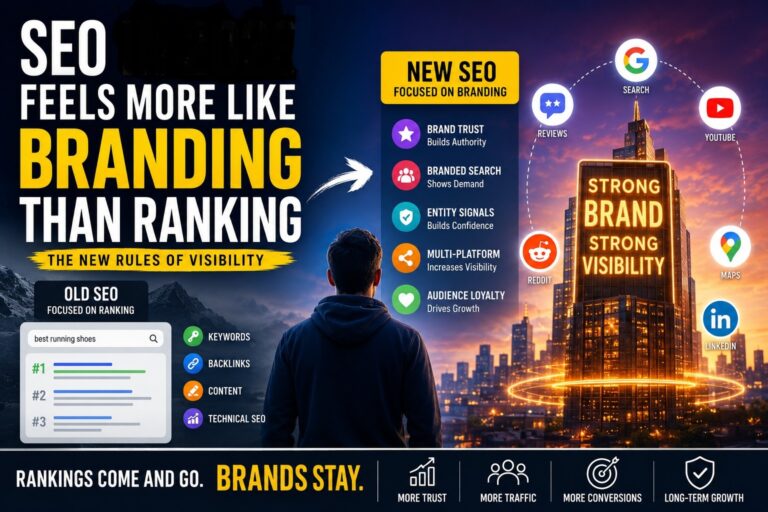
SEO used to be about getting users to click your website.
Now it’s becoming about influencing the answer before the click even happens.
That’s a completely different game.
If your content is good enough, AI may quote you even if the user never visits your page first.
That sounds scary.
But it’s also an opportunity.
Being cited by AI builds visibility, trust, and brand recognition in ways traditional rankings never could.
AI Mode vs AI Overviews: Which One Should You Optimise For?
The honest answer is both. Don’t build separate strategies. Build better content.
If your article is:
- Accurate
- Easy to understand
- Well structured
- Rich with examples
- Backed by experience
- Updated regularly
You’ll naturally improve your chances of appearing in both AI Overviews and AI Mode.


One Comment